Since 2021 I have run Mapping Network Inc., a Canadian distributor of IoT hardware: Helium hotspots, GEODNET miners and LoRaWAN accessories. Here is how that kind of network works, and what I build on it.
A Canadian distributor of IoT hardware for consumers and businesses: Helium hotspots, GEODNET miners and LoRaWAN accessories, sold through its own store and fulfilment.
LoRaWAN networks let small, low-power devices like trackers report their position over kilometres, through hotspots that people and businesses host.
Illustration: a tracker reporting through nearby hotspots. Tap the map to host one.
Mapping Network project
Beehives that report in from the field.
We fitted four beehives and an outdoor spot with small LoRaWAN temperature and humidity sensors. Every few minutes they sent a reading over the Helium network to a dashboard, so the beekeeper could check on a winter cluster without opening the hive and letting the heat out.
No wiring, no Wi-Fi in the field, batteries that last for seasons. This is the same idea that powers asset tracking and building monitoring for businesses.
Hive 1–°C
Temperature–average today
Humidity–%right now
Max today–
Avg humidity–
Outside air–
Battery–
Last 24 hours Sensor Outside Humidity
30 days Daily average Outside
A winter 2023 replay with illustrative readings, rebuilt from the original dashboard. Tap a chart to read it.
Sensor in the hiveWakes, measures, sends a few bytes over LoRaWAN.
Helium hotspotAny hotspot in range hears it, kilometres away.
Network serverChecks the device's keys and forwards the reading.
DashboardStores every reading and charts it for the beekeeper.
Mapping Network project · 2023
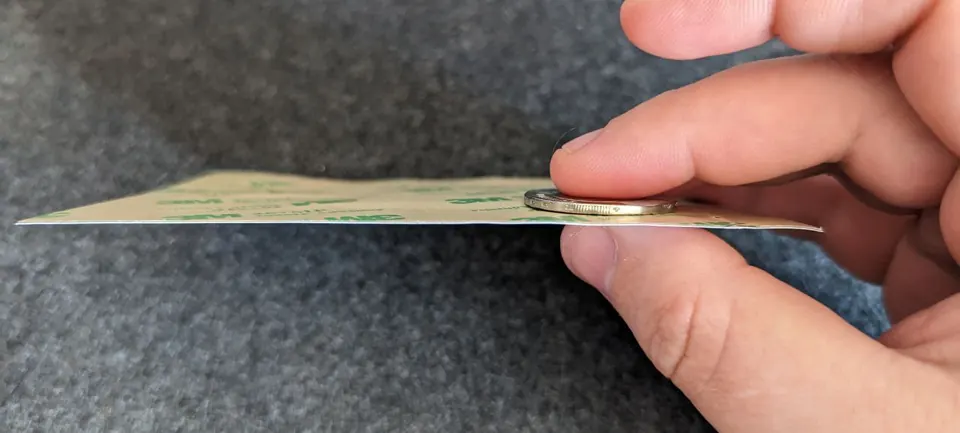
A tracker thinner than a coin.
We tested sticker trackers: peel-and-stick LoRaWAN tags with a temperature sensor and a motion sensor, flat enough to go inside a label or a box liner. There's no GPS chip. The Helium network works out roughly where the tag is from which hotspots heard it.
That keeps the cost and the battery drain tiny, so one tag can follow a shipment for its whole trip. The hardware design is open source.
Edge-on next to a coin.
Thinner than a coinPeel, stick, ship
No GPSLocated by the network
TemperatureCold-chain checks
MotionBumps and drops
Vancouver Island → Seattle
When
–
Distance
–
Heard by
–
Box temp
–
Replays of real 2023 test trips. Pins mark where the network picked the tag up; the line between them is approximate.
Wildfire monitoring
Sensors that smell smoke before anyone sees it.
Forests have no power and no cell signal, which is exactly where LoRaWAN shines. Small battery sensors spaced through the trees watch temperature, humidity and air quality, and a hotspot on a high point carries their alerts out kilometres to the people who respond.
Every minute counts with a wildfire. A sensor that trips while a fire is still small buys crews time a lookout tower or a satellite pass can't.
Wind →Burning 0 haFirst alert –Sensors tripped 0
Simulation. Tap the forest to start a fire, then watch the sensors catch it.
Early detectionHeat, humidity and smoke readings flag a fire while it's still small.
Fire weatherDry, hot, windy hours show up on a map, so risk is known before a spark.
After the fireThe same sensors watch for flare-ups and track recovery.
How a people-powered network works
Someone hosts a hotspotA small radio on a home or business plugs into power and the internet, and covers a few kilometres around it.
Devices send tiny messagesTrackers and sensors wake up, send a few bytes over LoRaWAN, and go back to sleep. Batteries last months or years.
Any nearby hotspot relays itThe message reaches the owner's app through whichever hotspots hear it. Hosts are rewarded for the coverage they provide.
Community projects that put the network to work locally.
Hive monitoringFour beehives and an outdoor sensor reporting temperature and humidity over Helium, with a live dashboard for the beekeeper.LoRaWAN · Dashboard
Cobourg BlanketA community Helium LoRaWAN coverage map and stolen-item tracker registry for Cobourg, Ontario.TypeScript · IoT
Want to work on something like this?
Tell me what you're working on. I'll tell you honestly whether I can help, and where I'd start.